

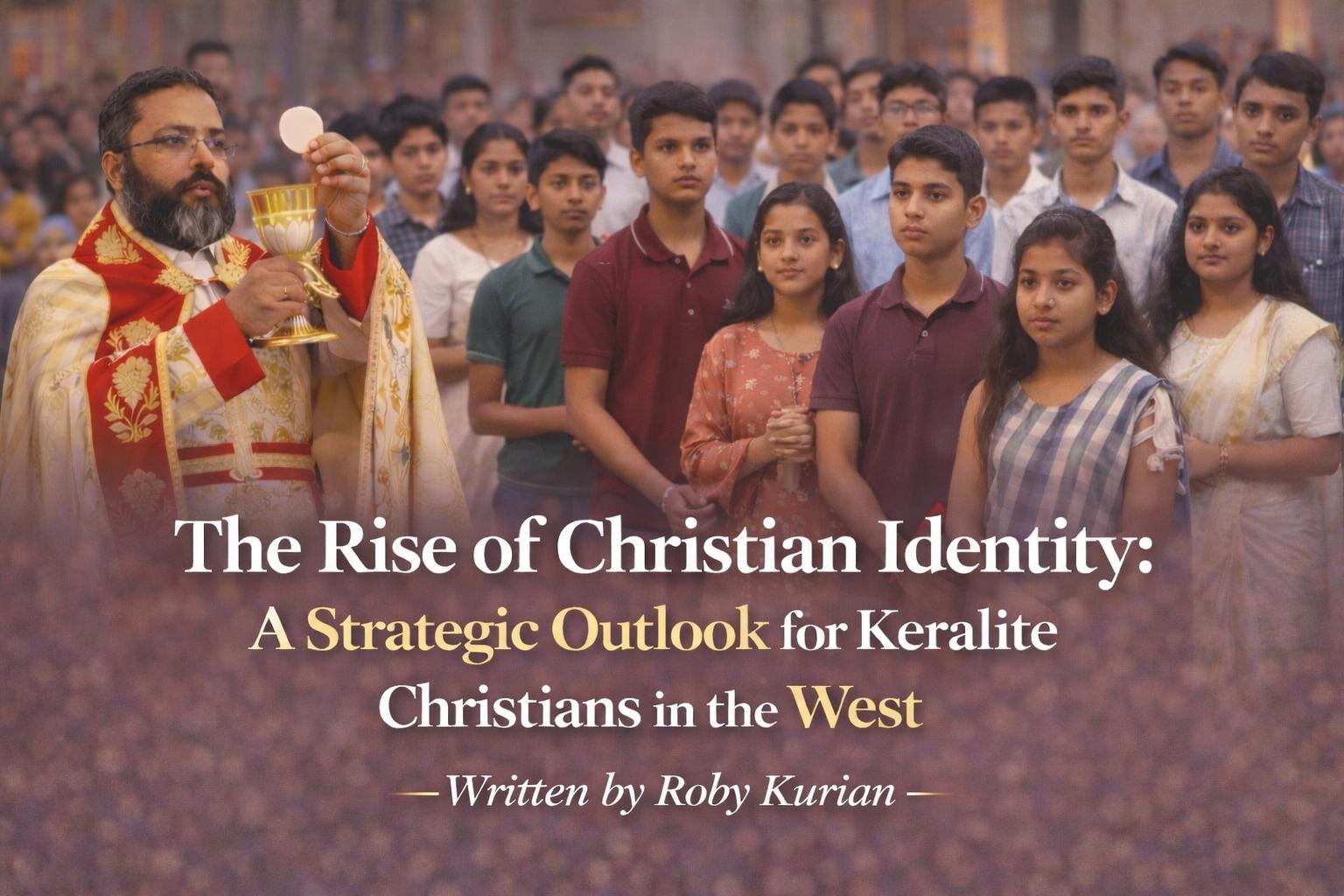
Not long ago, openly identifying as a Christian was often seen as socially unfashionable. Peer pressure and strong media influence, especially on university campuses and in public spaces, reinforced that perception. However, the trend is gradually reversing. The shift has been faster in the United States and slower, but increasingly visible, across the wider Western world. Global media and intellectual circles describe this as part of a broader realignment of cultural and social values. Many interpret it as renewed interest in faith, tradition, and the moral foundations that have historically shaped Western civilization. In this context, the growing visibility of Christian identity suggests a deeper search for meaning, stability, and continuity in a rapidly changing world.
From a historical perspective, Christian values rooted in the Bible and tradition have supported freedom and human dignity. Many argue that democratic principles have been shaped in significant ways by Christian moral and philosophical traditions, an influence often overlooked in contemporary discourse. The 20th century brought profound global transformation, including two World Wars. In the post-World War II period, change accelerated through the rise of communism, movements such as liberation theology, the spread of left-leaning ideological currents, major social shifts such as women’s empowerment and the sexual revolution, and the growing influence of identity-based movements, some of which were critical of traditional Christian institutions. These developments unfolded in an increasingly globalized, media-driven environment shaped by social media and rapid technological change, from early computers to smartphones and artificial intelligence. The period also saw the emergence of Islamic terrorism, which has had a lasting impact on global stability.

Islamic terrorism did not emerge in isolation. The spread of Wahhabism, heavily supported and funded by Saudi Arabia, played a major role in shaping radical ideologies across many Sunni-majority. In part, this was a response to the Islamic Revolution in Iran, as Saudi Arabia sought to counter Iran’s ideological and geopolitical influence by promoting its own framework globally. Over time, this contributed to the rise of multiple extremist groups, including ISIS. The result was widespread violence, including the killing of hundreds of thousands of Christians and other non-Muslims, and a serious threat to global peace.
In recent years, however, notable shifts have occurred. Iran is under increasing pressure amid ongoing geopolitical tensions involving Israel and the United States. At the same time, countries such as Saudi Arabia and the United Arab Emirates are moving toward modernization. In Saudi Arabia, for example, Friday sermons delivered by imams are regulated and require prior government approval, reflecting a move away from unchecked religious radicalization.


The global impact of Islamic terrorism and fundamentalism has also prompted reactions in different regions. In India, the rise of organizations such as RSS and the political growth of BJP can be understood within this broader context of long-term religious, cultural, and security concerns. Similarly, in Myanmar (Burma), even traditionally non-violent Buddhist communities have taken up arms in response to perceived threats. Shifts in American Nationalism and Evangelical Influence across the World In Europe and North America, repeated exposure to extremism and social tensions has led many societies to reconsider earlier ultra-left or purely secular approaches. This reassessment has contributed to the rise of right-wing political movements in several countries. Alongside this political shift, there is renewed interest in returning to cultural and religious roots, often Christian roots. The trend is most visible in the U.S. Even in countries like France, long considered a stronghold of secularism since the French Revolution, there are signs of people rethinking identity, tradition, and faith. Among younger generations, there appears to be a gradual movement back toward the Church after a period shaped by wokeism and ultra-left ideologies. Many analysts argue that the COVID-19 pandemic accelerated a return to God and the Church, as isolation and the limits of modern systems prompted deeper reflection on meaning and faith. From this perspective, discussion around Christian nationalism is not an isolated phenomenon. It is part of a broader global shift involving history, ideology, religion, and identity.
This raises an important question: how should Malayali Catholics in the West understand and respond to these developments? From a Kerala Catholic perspective, observations in Canadian and American churches reveal something striking. There is a relatively limited visible presence of saints’ statues and Marian devotion compared to traditional expressions found in Kerala and elsewhere. This is particularly noteworthy given the geographical proximity to Mexico, where the Marian apparition of Our Lady of Guadalupe took place. From an evangelical perspective, the Guadalupe apparition can be seen as one of the most significant Marian events in history, with estimates suggesting that nearly one million people converted to Catholicism within a short period. Even compared to Lourdes or Fatima, its direct impact in conversions is extraordinary. Yet churches in Canada and the United States often display a more moderate or minimal Marian presence.
One contributing factor is the influence of Pentecostal and Protestant traditions, which often view statues and Marian devotion as unbiblical or as forms of idolatry. As a result, the Catholic Church in North America appears to have adopted a more restrained Marian expression, possibly in response to these perceptions. This reflects a broader Pentecostal influence on Catholic practice in North America. At a popular level, the Catholic Charismatic movement also shows similarities with Pentecostal-style worship and spiritual expression, another example of evangelical influence on North American Catholics.
Compared to Europe, where Catholicism in many regions has weakened significantly, almost resembling a “lion without teeth and nails,” Catholicism in the United States appears more active, expressive, and resilient. This vitality is partly shaped by the wider religious culture, including the energy seen in Pentecostal communities. The United States also retains a cultural reference to God, as seen in the phrase printed on its currency: “In God We Trust.” As the world moves away from a balance of multiple powers toward stronger U.S. dominance, the growing shift of American society toward a Christian-centered identity and nationalism is likely to influence cultural and ideological trends across the world.
It is important to recognize that charismatic spirituality is not untouchable, but is returning to its origins in the early Catholics of the first and second centuries. In recent decades, despite controversies and upheavals within Kerala Church and society, charismatic spirituality has kept many of the faithful close to the Church. If the Syro-Malabar Church has a God-given spiritual asset to offer the wider Catholic world, it is this charismatic spirituality, along with plentiful vocations, something not seen elsewhere in the Catholic world in the same way. That asset must now be consciously brought into the work of re-evangelizing the West.
**A Silent Awareness Gap Among Parents, Catechists, and Community Leaders: A further question arises: what impact might the rise of Christian identity and American nationalism have on Keralites in North America, Europe, and other Western countries? There appears to be a gradual return to faith even among Catholics in Canada, not only within immigrant populations but also among Canadian-born Anglo-Saxon individuals. This is a significant and encouraging development, and it calls for churches to respond with wisdom and foresight. Unless the Catholic Church, particularly Kerala-origin churches such as the Syro-Malabar and Syro-Malankara Churches, adapts to modern socio-cultural realities, it may struggle to engage younger generations and miss this opportunity.
One key concern is that many of these communities remain heavily language-centered, with a strong emphasis on Malayalam in liturgy, catechism, and communication. While this helps preserve cultural identity, it can also unintentionally alienate younger generations born and raised in the West. For many of them, English is their primary language, and their cultural outlook is shaped more by Western society than by Indian contexts. As a result, this language and cultural gap can limit full engagement with the faith and, importantly, prevent them from benefiting from the broader renewed interest in Christianity.
A key challenge in this transition is parental resistance, as many Kerala-origin parents in the West remain hesitant to shift to English Qurbana and youth-focused liturgical practices. However, the Syro-Malabar Church in the United States is moving toward a complete shift to English Qurbana, reflecting a significant change in approach. In contrast, progress in Canada remains cautious due to continued parental opposition, while the Syro-Malabar Church in the United Kingdom is placing greater emphasis on Malayalam along with Syriac, which may widen the gap with younger generations.
Kerala-born adults in the West must recognize that the notion that preserving Malayalam alone safeguards faith and identity is misguided and serves only their generation. In fact, it may backfire by weakening the very values they seek to pass on.
In previous decades, particularly through the influence of Catholic Charismatic movements and youth initiatives such as Jesus Youth, there was a visible and encouraging trend among Kerala Catholic youth toward deeper engagement with faith and Church life. However, in recent decades, especially among the Gen Z generation, this trend appears to be fading.
A significant portion of this generation, many of whom were already becoming less connected to regular Church practice, has now migrated in large numbers to Western countries, including Canada, the United Kingdom, Australia, other parts of Europe, and the United States. Informal observations, peer discussions, and community-level assessments, though not formal statistical studies, consistently suggest a concerning pattern: a vast majority, often estimated at around 60% or more, of these young Kerala-origin Catholics are not regular participants in Sunday Mass or in the life of any church, whether Malayalam language services or otherwise. While work conditions and shifting schedules may occasionally limit participation, even a minimal commitment, such as attending Mass on Sundays or periodically on available weekdays, appears to be lacking in many cases. This points to deeper and ongoing disengagement from the Church.
The long-term implications are significant. The future of Syro-Malabar and Syro-Malankara dioceses in Western countries will largely depend on this generation, who will form families and raise the next generation of Catholics. If the first generation itself becomes distanced from the Church, the consequences for the second generation could be far more serious. This is therefore a critical area requiring immediate and focused attention.
In recent years, the Syro-Malabar Church, including its dioceses in Western countries, has observed initiatives such as the “Community Empowerment Year.” However, it remains an open question how far such efforts have addressed these fundamental challenges. The issues outlined earlier, particularly engagement of Western-born youth, and pastoral care for recently migrated Gen Z young adults and international students, are not peripheral concerns but central priorities that must be addressed with urgency, clarity, and long-term strategic vision.
Empowering the Jesus Youth Movement and Strengthening Clergy Retention: Two Strategic Imperatives: To address growing disengagement among Kerala-origin Gen Z youth and retain Western-born generations, overseas Syro-Malabar dioceses may need a more pragmatic approach. Historically, in Kerala, the institutional Church has struggled to sustain youth engagement on its own. Youth organizations such as KCYM have often been personality-driven, flourishing under a dynamic priest but fading after that priest is transferred. By contrast, the Jesus Youth Movement stands out for its ability to sustain youth involvement through spiritually vibrant and self-motivated young people, regardless of clergy involvement.
On spiritual grounds, the sons and daughters of the Syro-Malabar Church from Kerala have been brought to the Western world by God to re-evangelize the West. Effective evangelization also requires understanding what has already worked in intellectually advanced and materially prosperous societies. The United States is the clearest example. Despite being the richest and most powerful country in the developed world, it continues to retain the strongest Christian identity in the Western world, and evangelical and Pentecostal influence is one of the reasons, as discussed earlier.
In this context, the role of the Jesus Youth Movement, an organization rooted in the same charismatic spirituality, is understandable. Jesus Youth’s strength lies in charismatic spirituality, particularly in receiving and using the gifts and charisms of the Holy Spirit for evangelization. As Scripture indicates, these gifts are given especially to benefit non-believers, not mainly those already strong in faith. Therefore, anyone seeking effective evangelization or re-evangelization must learn to receive, nurture, and use these charisms.
At the same time, as a pontifically recognized international Catholic movement operating across different rites of the Universal Church, Jesus Youth must not be reduced to a local or parish-bound organization. Church leadership must recognize and respect that its vision and mission extends beyond the Syro-Malabar Church, and allow it to operate freely for the wider benefit of the Universal Church, acting as a liaison between the East and the West. The Syro-Malabar Church does not have another suitable resource to establish such a people-to-people connection with mainstream churches in the West. This can also help Eastern-rite youth overcome the risk of becoming inward-looking and disconnected from the broader society, which would weaken both evangelization and spiritual growth. In this context, Church leadership must guide Jesus Youth to form Western-born youth as leaders. Looking at the movement’s national and international teams, many faces still appear to be Indian-born, though some Western-born youth are involved. A clear transition is needed so that leadership in the Western context increasingly reflects locally born generations, ensuring continuity and relevance.
In churches such as the overseas Syro-Malabar Church, another challenge is clergy retention. Many priests serve only around 10 years before returning to India. During this time, some focus mainly on routine responsibilities such as celebrating Holy Mass and hearing confessions, with limited engagement in broader social and cultural contexts. Just as immigrants need time to understand a new country’s cultural sensitivities and social dynamics, priests also require time to grow into their roles within these communities. The first ten years can be understood as a critical period of learning and adaptation. When priests leave after this phase, it creates an intellectual and pastoral “brain drain.” A well-trained and experienced priest who understands the local context should, therefore, ideally remain for an additional ten to fifteen years, serving the community with greater effectiveness, maturity, and insight. The Church must develop long-term strategies to retain capable and motivated priests, grounded in a clear and honest assessment of why many leave diocesan assignments after five to ten years. Identifying the underlying causes, whether pastoral, cultural, administrative, or personal, and implementing targeted retention measures is an immediate priority for the Church’s long-term stability and growth.
The Future of Non-Catholic Nasrani Churches and Malayalee Latin Catholics in the West: Beyond the Syro-Malabar and Syro-Malankara Churches, similar concerns apply to other Kerala-origin churches in the West, including the Orthodox, Jacobite, Mar Thoma, and CSI Churches, as well as Pentecostal groups. These communities, often smaller and institutionally limited, face significant challenges in sustaining faith across generations. While the first generation largely remains attached to Malayalam-based pastoral and liturgical forms, the second generation shows a much higher tendency toward disengagement.
In regions where these communities have minimal presence, families often participate in local Catholic churches or attend Syro-Malabar services during major feasts. However, differences in ecclesial identity can hinder regular Sunday attendance. This pattern can contribute to identity confusion among their Western-born children.
Accordingly, there is a pressing need for clear pastoral direction from their Church hierarchies in Kerala, along with structured collaboration with doctrinally similar local churches, to sustain Christian identity beyond the first generation.
This article also remains incomplete without mentioning Malayalee Latin Catholics in the West: Many in this group, especially those historically connected to Syro-Malabar church life before formal eparchies were established, often carry a quiet sense of being on the margins. While canon law does not allow them to be formally counted within Syro-Malabar parish structures or leadership roles, the Church does not deny them access to sacraments or pastoral care. Still, this distinction can create a personal sense of exclusion and, in some places, has led to subtle tensions within the wider community.
At the same time, their situation has a practical advantage. As members of the Latin Church in Western countries, their children are more naturally integrated into local parish life, which may ultimately strengthen the continuity of faith across generations. Meanwhile, the first generation continues to draw support from Malayalam-language liturgy and community life through Syro-Malabar services.
The Church’s Synodal Path: A Way Forward To respond effectively to these challenges and to benefit from the broader revival of Christian identity in the West, the most practical and immediate step is to follow the direction given by the universal Church: implementing synodality. This makes the Church’s current global direction especially relevant.
Through the Synod on Synodality, formally launched in 2021 under the theme “For a Synodal Church: Communion, Participation, and Mission,” Pope Francis has called on dioceses worldwide to listen more carefully to the faithful and to involve them more fully in discernment and pastoral decision-making. This was presented not as an abstract idea, but as a structured global process beginning at the diocesan level. The Synod’s Final Document, approved by the Pope in 2024, further calls on local Churches to take concrete steps to implement this approach in real life.
Within the Syro-Malabar Church, however, visible steps toward implementing synodality appear limited. Only one or two dioceses show clear movement, while many others have not engaged meaningfully with the process. One reason synodality may not have been fully embraced in practice is the fear that it could dilute the authority of the hierarchy. However, this reflects a misunderstanding. Synodality is not about making the Church democratic in a political sense. It is about fostering a culture of listening, dialogue, and collective discernment within the Church’s existing structure.
Implementing synodality is even more critical in overseas Syro-Malabar and Syro-Malankara communities. In many of these contexts, bishops and priests are relatively new to the countries they serve and are still learning local realities. At the same time, many well-informed lay faithful, professionals, long-term residents, and community members have deeper and more practical understanding of the social, cultural, and institutional environment in these countries. Their lived experience and insight are invaluable. Ignoring such voices not only limits pastoral effectiveness, but also risks disconnecting the Church from the community it seeks to serve.
One of the simplest and most effective ways to begin is by strengthening and properly activating existing structures such as diocesan pastoral councils. Pastoral councils can provide a forum where local knowledge is brought into dialogue with pastoral leadership, helping the Church identify real issues and respond with practical, effective solutions.
If implemented sincerely in the spirit of synodality, this step alone could become one of the most realistic and effective ways for the Church to respond to current challenges. At present, diocesan pastoral councils, both in Kerala and in many overseas contexts, are widely seen as largely symbolic rather than effective forums for real discussion. Meaningful dialogue is often missing, and in many cases these bodies do not function as genuine platforms for consultation. Whether members are elected or nominated, they are not always the most capable or well-informed individuals who can contribute ideas and insights. Instead, selections are often made for the sake of representation. This weakens the council’s purpose. What is urgently needed is a shift toward identifying and including people who understand the community’s real challenges, can think critically, and can engage constructively.
For the Syro-Malabar and Syro-Malankara Churches, the way forward is clear. They must build on their strongest emerging asset: charismatic spirituality, which is visibly distinctive from local Catholic churches in the West. They must consciously harness this God-given spiritual asset to sustain the spiritual growth of their own people and to re-evangelize the countries where they are replanted.
This, however, requires internal refinement and a revival of the existing “Kerala model” to meet the socio-cultural challenges they face in the West. The Church must energize every level of its life, including liturgy, catechesis, youth formation, and community structures, so it becomes spiritually vibrant and culturally relevant. Only a Church that is visibly alive, prayerful, and Spirit-filled will retain its younger generations.
Our enduring strengths-strong marital commitment, deep family bonds, respect for parents, disciplined family prayer, Sunday observance, and church fidelity-are not cultural leftovers. They are strategic assets in a Western environment increasingly shaped by individualism, materialism, and pragmatism. The choice is stark: become a spiritually charged, outward-facing powerhouse that attracts and forms future generations, or gradually lose relevance in the Western world beyond the first generation.
Stay updated with more content like this – Christian News , Community news, Catholic videos, Discussions and more . Join the Author’s WhatsApp Community—Click the link below.
https://chat.whatsapp.com/EqB1TCPY0Hw37zGaBSVAle?mode=gi_t
✝️Keralites in the West- Christian News,updates and discussion.




Leave a Reply