

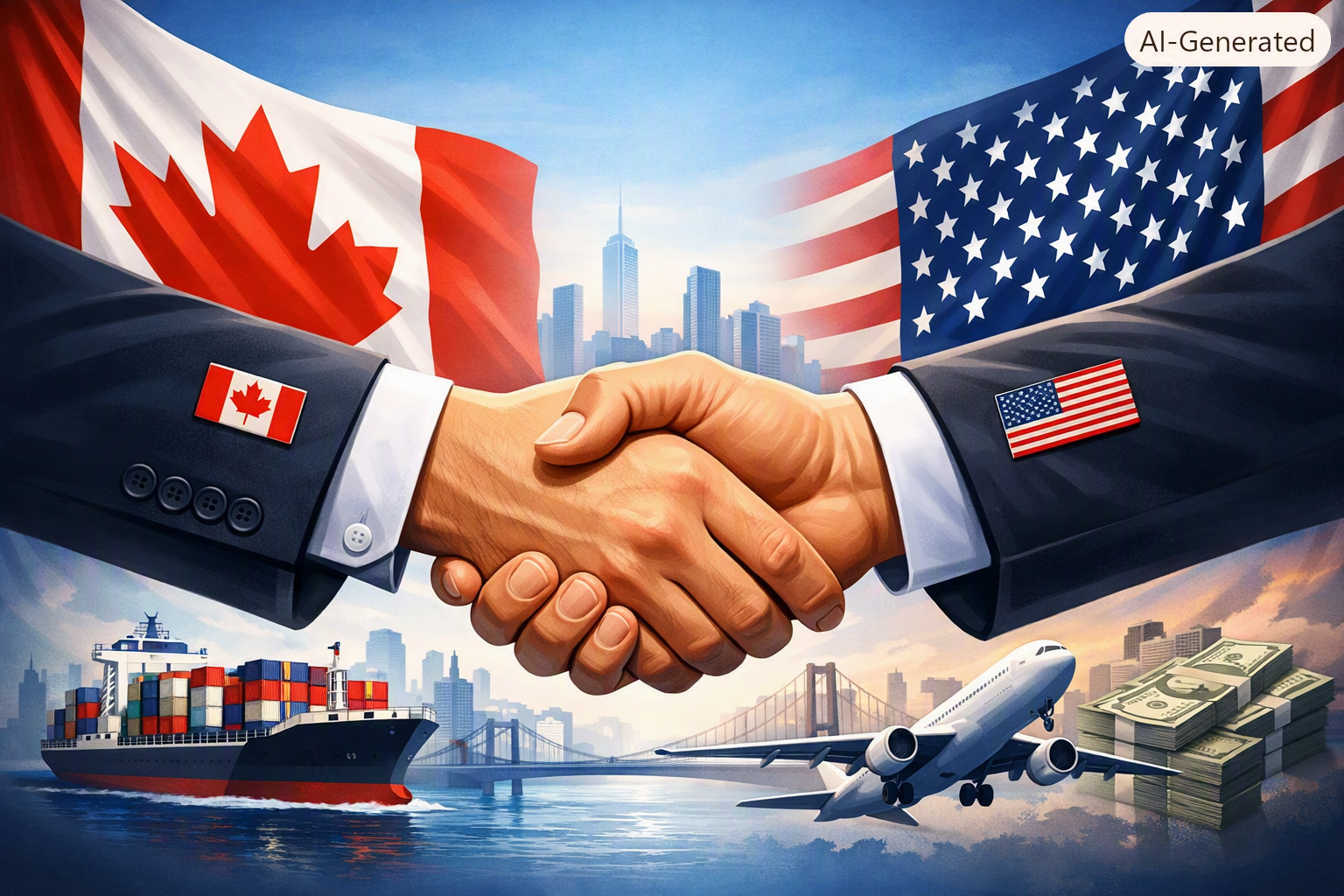
A Media Person’s View: How the Tariff Fight Is Changing the Emotional Map Between Canadians and Americans
As a media person, I speak to people every day — workers, families, small business owners, political observers — and one thing is clear:
The Canada–U.S. relationship is going through a cultural shift.
Not because people suddenly became extremists, but because political decisions have started to feel personal.
For decades, Canadians and Americans believed they were almost the same.
Shared culture. Shared border. Shared lifestyle.
But the tariff fight under President Donald Trump introduced a new tension that made people rethink that closeness.
This article reflects what people tell me, what they fear, and what they are trying to understand.
When Trump Won, Canada Felt the Shockwave
Many Canadians still talk about the moment Trump won the election.
People told me:
“When Trump came to power, Canada received thousands of illegal migrants crossing the border. It hurt him politically — and it hurt us socially.”
This wasn’t just a policy issue.
It created political friction on both sides of the border.
Americans who supported Trump felt frustrated about border pressure.
Canadians felt overwhelmed by sudden migration spikes.
Both sides felt misunderstood.
This emotional tension planted the first seeds of distrust.
The Tariff Fight: Turning Friendship Into a Transaction
The tariff fight didn’t just hit industries — it hit mindsets.
People tell me: “It’s like relationships became business deals. Everything is negotiation.”
Tariffs made Canadians feel targeted.Tariffs made Americans question why they were supporting policies that hurt a friendly neighbour.Even Trump supporters began asking:
“Why are we mentally supporting something that damages Canada — a country we always saw as close?”
This wasn’t extremism.
It was confusion, concern, and compliance pressure.
The Alberta Spark — A Political Shock
Later, Trump made comments that sparked a strange idea in Canadian minds:
Could the U.S. take over Alberta?
People told me: “It felt like a political war — not a real invasion, but a psychological one.”
This wasn’t a literal threat.
It was a symbolic spark that made Canadians feel vulnerable and Americans feel powerful.
It created a cultural moment where Canadians started asking:
Why is our neighbour talking like this?
Are we seen as partners or assets?
Is this political theatre or political pressure?
Americans, meanwhile, began questioning the emotional loyalty they had given to Trump’s rhetoric.
A Reality Check — Not Extremism
The people I talk to are not extremists.
They are ordinary citizens trying to understand why a friendly relationship suddenly feels like a negotiation.
They tell me:
Tariffs hurt both sides.Migration pressure created resentment
Political sparks created fear
Emotional support for leaders became complicated
This is not hatred.
It is awareness.
A New Culture: Business in Relationships
The biggest cultural shift I see is this:
People now feel that relationships — even between countries — are treated like business deals.
And they don’t like it.
People say: “It’s not good for anyone. It’s creating a culture of suspicion.”
This culture is new.It’s uncomfortable.And it’s reshaping how Canadians and Americans see each other.
The Truth: No One Wins a Relationship War
The tariff fight, the migration pressure, and the Alberta spark all point to one reality:
When neighbours fight, nobody wins.
Economies suffer.Trust suffers.Culture suffers.
And the idea that Canadians andAmericans are “almost the same” begins to fade.
But people also tell me something hopeful:
“We can rebuild this relationship — if we stop treating it like a business contract.”
Final Thought
As a media person, I see a North America that is not breaking apart — but waking up.
People are questioning political loyalty, emotional support, and the cost of treating neighbours like competitors.
This is not extremism.It is clarity.It is reality.It is a cultural shift that deserves honest conversation.










Leave a Reply